


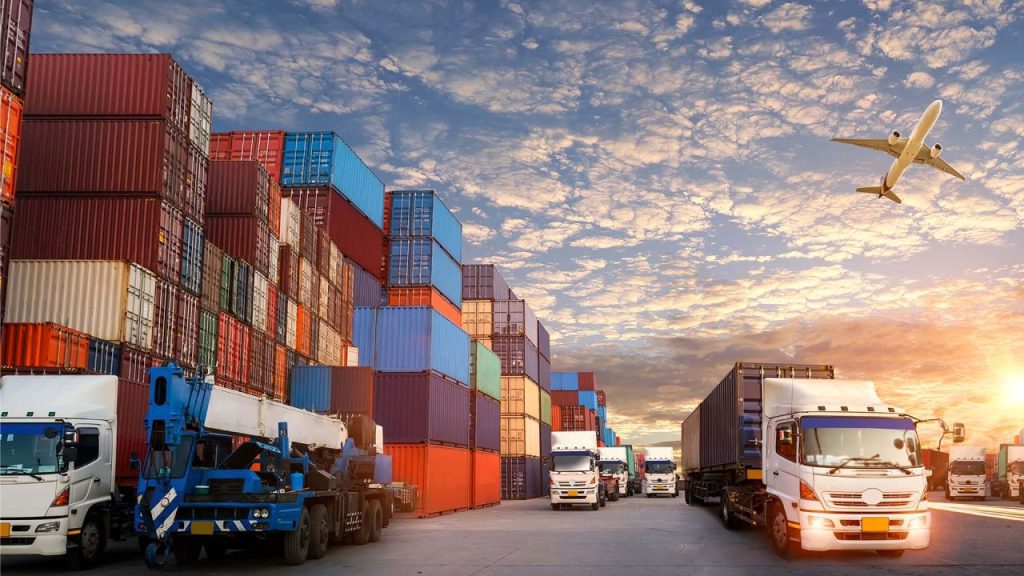
UK businesses trading with the European Union face a changing landscape governed by full implementation of the UK Border Target Operating Model (BTOM) and expanding European regulatory frameworks like the Carbon Border Adjustment Mechanism (CBAM). Understanding these developments—spanning SPS controls, digital customs declarations, and rules of origin—is essential for UK exporters and importers to avoid supply chain friction, administrative penalties, and customs delays across cross-border operations.
Introduction
Five years after the implementation of the UK–EU Trade and Cooperation Agreement (TCA), cross-border commerce between the United Kingdom and the European Union operates under a mature yet increasingly complex regulatory environment. For UK manufacturers, food producers, logistics operators, and traders, maintaining efficient supply chains requires continuous adaptation to evolving border controls, environmental tariffs, and administrative procedures.
While the fundamental terms of tariff-free and quota-free trade under the TCA remain intact for goods meeting Rules of Origin criteria, the practical mechanics of moving goods across the English Channel and the Irish Sea have shifted significantly. The full enforcement of the UK’s Border Target Operating Model (BTOM) alongside new EU environmental mandates—most notably the Carbon Border Adjustment Mechanism (CBAM)—presents operational priorities for business leaders and trade compliance teams.
This guide breaks down the core developments in UK–EU trade regulations, detailing the compliance standards, statistical realities, and actionable steps required for UK enterprises trading with European partners.
Table of Contents
-
Core Trade Dynamics: The Current Landscape
-
The Border Target Operating Model (BTOM) in Practice
-
EU Carbon Border Adjustment Mechanism (CBAM) Impact on UK Exporters
-
Rules of Origin and Commodity Compliance
-
Key UK–EU Trade Data
-
UK Impact Analysis
-
EU Impact Analysis
-
Practical Checklist for UK Businesses
-
Conclusion & Next Steps
Core Trade Dynamics: The Current Landscape
Trade between the UK and the EU represents the largest economic corridor for British exporters and importers. While bilateral agreements guarantee zero tariffs on goods originating within either territory, non-tariff measures (NTMs) remain the primary source of administrative requirement for cross-border operations.
+-----------------------------------------------------------------------+
|                       UK-EU Trade Compliance Structure                |
+-----------------------------------------------------------------------+
|                                                                       |
|   +--------------------------+          +-------------------------+   |
|   |  UK Imports (from EU)    |          |  UK Exports (to EU)     |   |
|   +--------------------------+          +-------------------------+   |
|   | • BTOM Safety & Security |          | • EU CBAM Data Reporting|   |
|   |   Declarations           |          | • Full Export Controls  |   |
|   | • Medium/High Risk SPS   |          | • EU Member State Import|   |
|   |   Physical Inspections   |          |   Customs & SPS Checks  |   |
|   | • CDS Entry Filing       |          | • Rules of Origin Certs |   |
|   +--------------------------+          +-------------------------+   |
|                                                                       |
+-----------------------------------------------------------------------+
Key factors shaping current trade conditions include:
-
Digital Border Infrastructure: Transition to automated, data-driven declarations via the UK Customs Declaration Service (CDS) and European equivalent systems.
-
Risk-Based SPS Controls: Biosecurity and sanitary/phytosanitary (SPS) regulations categorized into high, medium, and low risk tiers for animal products, plants, and agricultural goods.
-
Regulatory Divergence: Gradual differences between UK chemical (UK REACH), environmental, and safety standards and corresponding EU regulations.
The Border Target Operating Model (BTOM) in Practice
The UK Government’s Border Target Operating Model (BTOM) establishes the risk-based regime for safety, security, and sanitary/phytosanitary (SPS) controls on all imports entering Great Britain from the EU.
Risk Categorization Framework
Under BTOM, commodities imported from the EU are classified into three risk tiers:
| Risk Category | Commodity Types | Documentation Required | Physical Inspection Rate |
| High Risk | Live animals, high-risk plants, germinal products | Export Health Certificate (EHC), Phytosanitary Certificate, Pre-notification via IPAFFS | 100% / High frequency at Border Control Posts (BCPs) |
| Medium Risk | Raw meat, dairy products, chilled goods, medium-risk plants | Export Health Certificate / Phytosanitary Certificate, Pre-notification via IPAFFS | Sample-based inspection (typically 1% to 30% depending on commodity) |
| Low Risk | Processed shelf-stable foods, low-risk plant materials | Commercial Documentation, Import Pre-notification | Minimal checks (random/intelligence-led) |
Key BTOM Requirements for Importers
-
Safety and Security (S&S) Declarations: Full Entry Summary (ENS) declarations are mandatory for imports into Great Britain from the EU, requiring carriers or importers to submit transportation and consignment data prior to arrival.
-
Simplified Customs Procedures: Eligible traders utilize Simplified Customs Declaration Processes (SCDP) or Transits via Common Transit Convention (CTC) to streamline movement through major ports like Dover and Holyhead.
-
Common User Charges (CUC): Eligible imports entering through government-operated Border Control Posts in England and Wales face structured user fees per eligible load, requiring careful cost-accounting by logistics managers.
EU Carbon Border Adjustment Mechanism (CBAM) Impact on UK Exporters
The European Union’s Carbon Border Adjustment Mechanism (CBAM) introduces carbon-pricing considerations for non-EU industrial producers exporting into the EU single market.
Affected Sectors
UK businesses manufacturing and exporting goods in the following sectors are subject to CBAM provisions:
-
Iron and Steel
-
Aluminum
-
Fertilizers
-
Cement
-
Hydrogen
-
Electricity
Compliance Obligations for UK Exporters
While the EU importer of record bears the legal responsibility for submitting CBAM declarations and purchasing CBAM certificates, UK suppliers must provide verified embedded emissions data (Direct and Indirect emissions) calculated in accordance with EU methodologies.
-
Embedded Carbon Accounting: UK exporters must measure actual greenhouse gas emissions produced during production rather than relying on default values where possible.
-
Verification Standards: Emissions reports must undergo verification by an accredited independent body recognized under EU guidelines.
-
UK CBAM Alignment: The UK Government is developing a parallel UK CBAM mechanism for imports into Great Britain, creating a dual-compliance obligation for multinational supply chains operating across both jurisdictions.
Rules of Origin and Commodity Compliance
To qualify for 0% preferential tariffs under the UK–EU Trade and Cooperation Agreement, goods must satisfy specific Rules of Origin requirements proving they were sufficiently transformed or produced within the UK or EU.
+------------------------------------------------------------------------+
|                   Determining Preferential Tariff Status                |
+------------------------------------------------------------------------+
|                                                                        |
|  1. Do goods originate entirely in UK/EU?                              |
|     └── YES  ──> Qualifies for 0% Tariff (Claim Preferential Origin)   |
|     └── NO   ──> Step 2                                                |
|                                                                        |
|  2. Do non-originating inputs satisfy Product-Specific Rules (PSR)?    |
|   (e.g., Tariff Shift, Max Non-Originating Value %, Specific Process)  |
|     └── YES  ──> Qualifies for 0% Tariff (Requires Supplier Statement) |
|     └── NO   ──> Standard MFN Tariff Applies                           |
|                                                                        |
+------------------------------------------------------------------------+
Essential Steps for Origin Verification
-
Determine the HS Commodity Code: Accurately classify goods using the UK Global Tariff / EU Combined Nomenclature.
-
Review Product-Specific Rules (PSRs): Check the specific rule in Annex 2 of the TCA (e.g., Change of Tariff Classification, Value Add thresholds, or specific processing operations).
-
Maintain Audit Trails: Retain Supplier Declarations and long-term supplier declarations (LTSDs) for a minimum of 4 years to support “Importer’s Knowledge” claims or origin audits by HMRC and EU customs authorities.
Key UK–EU Trade Data
Official economic indicators highlight the ongoing scale and structure of bilateral UK–EU trade operations based on the latest available trade figures from the Office for National Statistics (ONS).
| Indicator | UK Exports to EU | UK Imports from EU | Total Bilateral Trade |
| Annual Goods Trade (Approx.) | £180–£195 Billion | £290–£310 Billion | ~£480–£505 Billion |
| Annual Services Trade (Approx.) | £160–£175 Billion | £120–£135 Billion | ~£280–£310 Billion |
| Primary Goods Categories | Machinery, Chemicals, Vehicles, Mineral Fuels | Machinery, Transport Equipment, Food/Live Animals, Chemicals | N/A |
| Customs Processing Volume | Millions of CDS entries annually | Millions of CDS entries annually | N/A |
Source: Office for National Statistics (ONS) UK Trade Data, Department for Business and Trade (DBT).
UK Impact Analysis
The evolving UK–EU trade framework has distinct structural effects on British businesses, supply chains, and economic planning:
-
Supply Chain Lead Times: Additional documentation steps, safety declarations, and potential physical inspections require buffer times for cross-Channel transit, particularly for perishable agri-food goods.
-
Administrative & Compliance Overhead: Small and medium-sized enterprises (SMEs) face higher fixed costs relative to revenue for customs brokers, transit filings, and specialized compliance software.
-
Service Sector Resilience: UK services trade—particularly in financial, legal, professional, and digital services—continues to demonstrate strong performance, supported by bilateral arrangements and digital service delivery protocols.
EU Impact Analysis
From the perspective of European businesses and member state authorities:
-
EU Import Controls: EU Member State customs authorities (such as French Douane, Dutch Douane, and Irish Revenue) maintain rigorous automated checks on goods arriving from Great Britain at major entry points (Calais, Rotterdam, Dublin).
-
Supply Chain Sourcing Decisions: Some EU manufacturers have adjusted component sourcing strategies, balancing UK supplier integration against administrative processing requirements.
-
SPS Biosecurity Priorities: EU agricultural authorities maintain strict enforcement of sanitary regulations on imports of animal products and plant life to protect European agricultural standards.
Practical Checklist for UK Businesses
To ensure compliance and minimize operational friction, UK companies trading across the UK–EU border should execute the following operational steps:
-
[ ] Audit Commodity Codes: Verify that all product HS codes align with current UK and EU tariff schedules.
-
[ ] Review Rules of Origin Documentation: Ensure valid Supplier Declarations are held for all goods exported under 0% preferential tariff claims.
-
[ ] Register on IPAFFS (for SPS Traders): Maintain active accounts on the UK’s Import of Products, Animals, Food and Feed System for pre-notifying imports.
-
[ ] Prepare CBAM Data Systems: Establish internal procedures to collect and verify embedded carbon emissions data for products covered under EU CBAM rules.
-
[ ] Verify CDS Authorization: Confirm customs brokers or internal logistics staff are fully authorized on HMRC’s Customs Declaration Service (CDS).
-
[ ] Assess EORI Validity: Ensure active GB and EU Economic Operators Registration and Identification (EORI) numbers are in place for relevant entities.
Conclusion & Next Steps
Navigating trade between Great Britain and the European Union requires proactive operational management, robust digital systems, and clear compliance procedures. While non-tariff barriers present ongoing administrative considerations, businesses that invest in accurate origin verification, automated customs data management, and structured supply chain tracking remain well-positioned to maintain uninterrupted cross-border operations.
Companies should regularly review guidance published by the Department for Business and Trade (DBT), HM Revenue & Customs (HMRC), and relevant industry associations to stay informed on operational updates and compliance timelines.
FAQ (Frequently Asked Questions)
What is the Border Target Operating Model (BTOM)?
Answer: The Border Target Operating Model (BTOM) is the UK Government’s risk-based model for safety, security, and sanitary/phytosanitary (SPS) import controls on goods entering Great Britain from the EU and non-EU countries.
Do UK goods still enter the EU duty-free under the TCA?
Answer: Yes, provided the goods meet the relevant Rules of Origin requirements set out in the UK–EU Trade and Cooperation Agreement. Goods that fail to meet these origin rules are subject to standard EU Most Favoured Nation (MFN) tariff rates.
How does the EU Carbon Border Adjustment Mechanism (CBAM) affect UK businesses?
Answer: UK businesses exporting CBAM-covered goods (such as steel, aluminum, fertilizers, and cement) to the EU must provide verified embedded greenhouse gas emissions data to their EU importers, who must report and surrender corresponding CBAM certificates.
What documentation is required to import medium-risk food products into the UK from the EU?
Answer: Medium-risk food and animal products require an Export Health Certificate (EHC) issued by an authorized official in the exporting country, along with pre-notification submitted via the UK’s IPAFFS system prior to arrival.
What is an EORI number and do I need one?
Answer: An Economic Operators Registration and Identification (EORI) number is required to submit customs declarations in the UK and EU. UK businesses trading with the EU need a GB EORI number for UK customs and an EU EORI number if acting as the importer/exporter of record within the EU.
What is the Customs Declaration Service (CDS)?
Answer: CDS is HM Revenue & Customs’ (HMRC) official digital platform for handling all UK import and export customs declarations, having fully replaced the legacy CHIEF system.
Are safety and security declarations required for EU-to-GB imports?
Answer: Yes, full Safety and Security (S&S) Entry Summary (ENS) declarations are mandatory for goods imported into Great Britain from the EU under the BTOM framework.
Where can UK exporters find official guidance on tariff rates and rules of origin?
Answer: Official information is available on the UK Government’s “Check duties and customs procedures for exporting goods” tool on GOV.UK and the Department for Business and Trade portal.
