


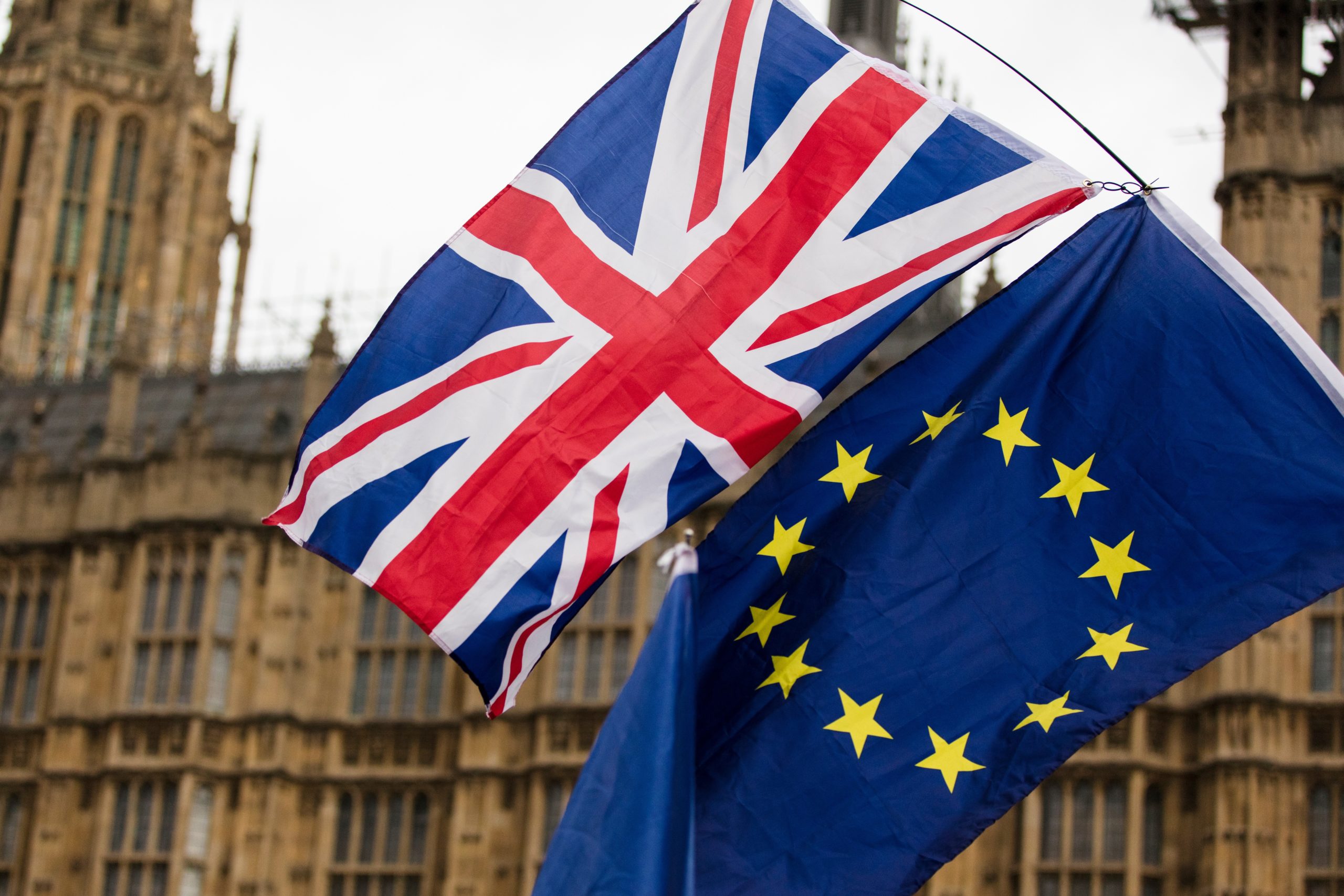
The relationship between the United Kingdom and the European Union is governed primarily by the EU–UK Trade and Cooperation Agreement (TCA) and the Windsor Framework. While goods trade remains free of tariffs and quotas, UK businesses face non-tariff barriers, customs controls, and regulatory divergence. For citizens, cross-border movement is shaped by passport restrictions, the EU’s Entry/Exit System (EES), and the UK’s Electronic Travel Authorisation (ETA).
Table of Contents
-
The Legal Framework: TCA and Withdrawal Agreement
-
Trade in Goods: Tariffs, Rules of Origin and Border Checks
-
Services and Financial Regulation
-
Northern Ireland and the Windsor Framework
-
Travel, Mobility and Immigration Rules
-
Security, Research and Energy Cooperation
-
Key Facts & Figures
-
Impact Matrix: UK, EU and Ireland
-
Timeline of Major Post-Brexit Milestones
-
Key Takeaways
-
Conclusion
The Legal Framework: TCA and Withdrawal Agreement
The structural architecture of post-Brexit UK–EU relations rests on two binding international treaties: the Withdrawal Agreement (signed in January 2020) and the Trade and Cooperation Agreement (TCA) (applied from 1 January 2021).
Together, these treaties replaced the UK’s 47-year membership of the European Union, removing Great Britain from the EU Single Market and Customs Union. While the Withdrawal Agreement resolved legacy issues—including citizens’ rights, the financial settlement, and the initial arrangements for Northern Ireland—the TCA sets out the rules for ongoing commercial, economic, and institutional ties.
Unlike standard free trade agreements, the TCA was designed to manage divergence rather than foster convergence. It establishes a overarching governing body—the Partnership Council—co-chaired by senior UK ministers and European Commissioners, supported by specialised committees overseeing trade, energy, fisheries, and law enforcement.
Trade in Goods: Tariffs, Rules of Origin and Border Checks
The primary headline of the TCA is that goods originating in either the UK or the EU enjoy zero tariffs and zero quotas when entering the other market. However, “zero tariff” does not mean friction-free trade.
To qualify for zero tariffs, goods must satisfy strict Rules of Origin (RoO), proving that a sufficient percentage of materials and processing occurred within the UK or EU. Goods imported from third countries (such as Asian components) and re-exported without transformation face standard tariffs.
       [UK Exporter]
             │
             ▼
   [Customs Declaration] ──► (Safety & Security Data)
             │
             ▼
   [Rules of Origin Test] ──► (Fails? Tariff Applied)
             │ (Passes)
             ▼
   [SPS / Physical Checks] ──► (High-Risk Goods Tested)
             │
             ▼
    [EU Market Entry]
Non-Tariff Barriers and the Border Target Operating Model
The introduction of full customs declarations, sanitary and phytosanitary (SPS) safety checks, and conformity assessments created significant non-tariff barriers:
-
Sanitary and Phytosanitary (SPS) Controls: Agri-food exports require export health certificates (EHCs), phytosanitary checks, and physical inspections at designated Border Control Posts (BCPs).
-
Border Target Operating Model (BTOM): The UK implemented a phased risk-based approach to imports from the EU, introducing physical checks on high- and medium-risk plant and animal products alongside safety and security declarations.
-
Conformity Marking: Goods sold in Great Britain require UKCA (or recognised CE) markings, while exports to the EU market must adhere strictly to CE marking standards and European technical regulations.
Services and Financial Regulation
Services account for around 80% of the UK economy, yet the TCA provides limited coverage for service sectors compared to goods trade.
Financial Services and Equivalence
Upon leaving the Single Market, UK financial services lost “passporting rights,” which previously allowed UK-regulated banks and financial institutions to operate seamlessly across all EU member states. Instead, market access depends on individual national regulatory regimes or specific “equivalence” decisions granted by the European Commission, which remain discretionary and revocable.
Professional Qualifications
The automatic mutual recognition of professional qualifications ceased on 31 December 2020. UK professionals—such as architects, engineers, accountants, and lawyers—must seek individual recognition in each EU member state where they wish to practice, subject to national qualification frameworks.
Northern Ireland and the Windsor Framework
Northern Ireland holds a unique position within UK–EU relations due to the imperative of preserving the Good Friday (Belfast) Agreement and preventing a hard land border on the island of Ireland.
The Windsor Framework, adopted in February 2023, amended the original Northern Ireland Protocol to ease trade friction between Great Britain (GB) and Northern Ireland (NI):
| Feature | Green Lane | Red Lane |
| Target Destination | Goods remaining within Northern Ireland / UK internal market | Goods at risk of entering the EU Single Market (Republic of Ireland) |
| Customs Requirements | Simplified paperwork, commercial data sharing | Full EU customs declarations & physical checks |
| Agri-Food Controls | Visual checks reduced to minimal sampling | Full EU SPS inspections & certification |
| Regulation Standard | UK public health and consumer standards apply | EU Single Market regulations apply |
This dual-market status allows Northern Ireland businesses to trade freely with both the UK internal market and the EU Single Market for goods.
Travel, Mobility and Immigration Rules
Freedom of movement between the UK and the EU ended on 31 December 2020. Citizens on both sides are now subject to international border regimes and immigration laws.
Short-Term Travel Rules
-
Visa-Free Allowance: UK citizens can travel to the EU Schengen Area visa-free for up to 90 days within any 180-day period. EU citizens enjoy short-term visit access to the UK for up to 6 months.
-
Passport Validity: UK passports issued for entry to the Schengen Area must be valid for at least 3 months beyond the intended departure date and issued within the last 10 years.
-
EU Entry/Exit System (EES): The automated biometric registration system records fingerprints and facial images of non-EU nationals entering Schengen borders, replacing manual passport stamping.
-
ETIAS and UK ETA: The EU’s European Travel Information and Authorisation System (ETIAS) and the UK’s Electronic Travel Authorisation (ETA) require travellers to secure digital permission prior to travel.
Work and Residency
UK nationals seeking to work, study, or reside in an EU member state must apply for visas or work permits under national immigration laws. Conversely, EU citizens entering the UK to work are subject to the UK’s Points-Based Immigration System.
Security, Research and Energy Cooperation
Beyond trade and travel, the UK–EU framework covers several critical pillars of bilateral cooperation:
-
Scientific Research: Effective 1 January 2024, the UK fully re-associated with Horizon Europe (the EU’s flagship scientific research funding programme) and the Copernicus Earth observation system, allowing UK researchers to lead consortia and access European grants.
-
Law Enforcement & Security: The TCA enables law enforcement cooperation, including access to criminal records via ECRIS, passenger name record (PNR) data sharing, and streamlined extradition arrangements, though the UK lost direct access to real-time databases like SIS II.
-
Energy & Climate: The UK and EU cooperate on energy trading through cross-border interconnectors and carbon markets. Both entities continue discussions on alignment regarding Carbon Border Adjustment Mechanisms (CBAM) to prevent carbon leakage across the Channel.
Key Facts & Figures
-
Primary Trade Partner: The EU remains the UK’s largest trading partner, accounting for roughly 42% of UK exports and 52% of UK imports.
-
Tariff Status: 0% tariffs and 0% quotas on all goods meeting Rules of Origin requirements under the Trade and Cooperation Agreement.
-
Schengen Stay Limit: Maximum 90 days in any 180-day rolling window for short-stay UK visitors.
-
Horizon Europe Budget Access: UK institutions enjoy full access to the EU’s €95.5 billion Horizon Europe research fund following the 2024 re-association agreement.
Impact Matrix: UK, EU and Ireland
UK Impact
-
Customs Compliance Costs: Small and medium enterprises (SMEs) bear administrative costs associated with customs entries, rules of origin documentation, and sanitary certificates.
-
Regulatory Autonomy: The UK Parliament gained the power to set distinct domestic laws, domestic subsidy controls, and environmental regulations, leading to gradual regulatory divergence from Brussels.
EU Impact
-
Market Adjustments: EU exporters face UK import requirements under the Border Target Operating Model, altering supply chain timelines for perishable goods.
-
Diplomatic Rebalancing: The departure of the UK removed a major liberal, market-orientated voice from the Council of the European Union, shifting internal voting dynamics.
Ireland Angle
-
Cross-Border Trade: Ireland shares the only land border between the UK and the EU. The Windsor Framework protects the seamless all-island economy, ensuring no physical infrastructure on the border between Ireland and Northern Ireland.
-
Direct Maritime Links: To bypass post-Brexit landbridge transit delays through Great Britain, direct sea routes between Irish ports (Dublin, Rosslare) and continental European ports (Cherbourg, Zeebrugge, Dunkirk) expanded significantly.
Verified Expert Commentary
“The Trade and Cooperation Agreement provided fundamental stability by avoiding tariffs, but it institutionalised border friction. The primary challenge for businesses now is managing regulatory divergence and supply chain administrative costs.”
— Dr. Anand Menon, Director of UK in a Changing Europe
Timeline of Major Post-Brexit Milestones
Key Takeaways
-
Tariff-Free, Not Border-Free: The TCA eliminates tariffs for compliant goods but mandates full customs declarations, safety declarations, and sanitary checks.
-
Northern Ireland’s Unique Position: The Windsor Framework preserves frictionless trade between Northern Ireland and both Great Britain (via Green Lane) and the EU.
-
Service Sector Friction: Financial passporting and automatic professional qualification recognition have ended, requiring country-by-country compliance.
-
New Travel Requirements: UK citizens face the 90/180-day Schengen limit, EES biometric tracking, and upcoming ETIAS authorization.
-
Targeted Cooperation: Scientific research (Horizon Europe) and energy security remain key areas of mutual alignment and shared investment.
Conclusion
UK and EU relations have entered an era defined by pragmatic treaty management, gradual adaptation, and targeted cooperation. While the fundamental decision to remain outside the EU Single Market and Customs Union establishes permanent structural trade barriers, ongoing negotiations focus on reducing practical friction—such as streamlining border procedures, aligning climate policies, and deepening security cooperation. Understanding this complex framework is essential for businesses, travellers, and policymakers operating across the UK and European economies.
Frequently Asked Questions (FAQ)
1. Does the UK–EU Trade and Cooperation Agreement eliminate all trade costs?
No. While the Trade and Cooperation Agreement (TCA) ensures zero tariffs and zero quotas on goods that meet Rules of Origin criteria, it does not eliminate non-tariff barriers. Businesses incur costs for customs declarations, export health certificates, rules of origin compliance documentation, and border inspection fees.
2. How does the Windsor Framework affect goods moving from Great Britain to Northern Ireland?
The Windsor Framework establishes a two-lane system. Goods destined solely for consumption within Northern Ireland pass through a “Green Lane” with minimal documentation and reduced physical checks. Goods intended for or at risk of entering the European Union (via the Republic of Ireland) must move through a “Red Lane” with full EU customs checks and documentation.
3. Can UK citizens work freely in the European Union?
No. Free movement of people ended on 31 December 2020. UK citizens must obtain a valid work permit or visa under the specific national regulations of the individual EU member state in which they intend to work.
4. What is the 90/180 day rule for UK travel to Europe?
UK passport holders can travel to the Schengen Area without a visa for up to 90 days within any rolling 180-day period. This calculation applies to all visits combined across the Schengen zone.
5. What is the EU Entry/Exit System (EES) and how does it affect UK travellers?
The Entry/Exit System (EES) is an automated digital system that registers non-EU travellers entering and exiting the Schengen Area. It replaces physical passport stamping with facial recognition and fingerprint data collection at border control posts.
6. Are UK university qualifications still recognised in the EU?
Academic degrees awarded by UK universities continue to be recognized internationally under standard educational frameworks. However, automatic mutual recognition of professional qualifications (such as for doctors, architects, and accountants) has ended, requiring individual state-level approval.
7. Is the UK part of Horizon Europe?
Yes. The UK re-joined Horizon Europe as an associated country on 1 January 2024. UK researchers, universities, and businesses can participate in and lead research projects funded by the programme on equal terms with EU counterparts.
8. What rules apply to buying online goods from the EU for UK consumers?
UK consumers buying goods from EU sellers must pay UK VAT (typically calculated at checkout for items under £135). For purchases exceeding £135, customs duties may apply if the product does not originate in the UK or EU under rules of origin, along with potential courier handling fees.
