


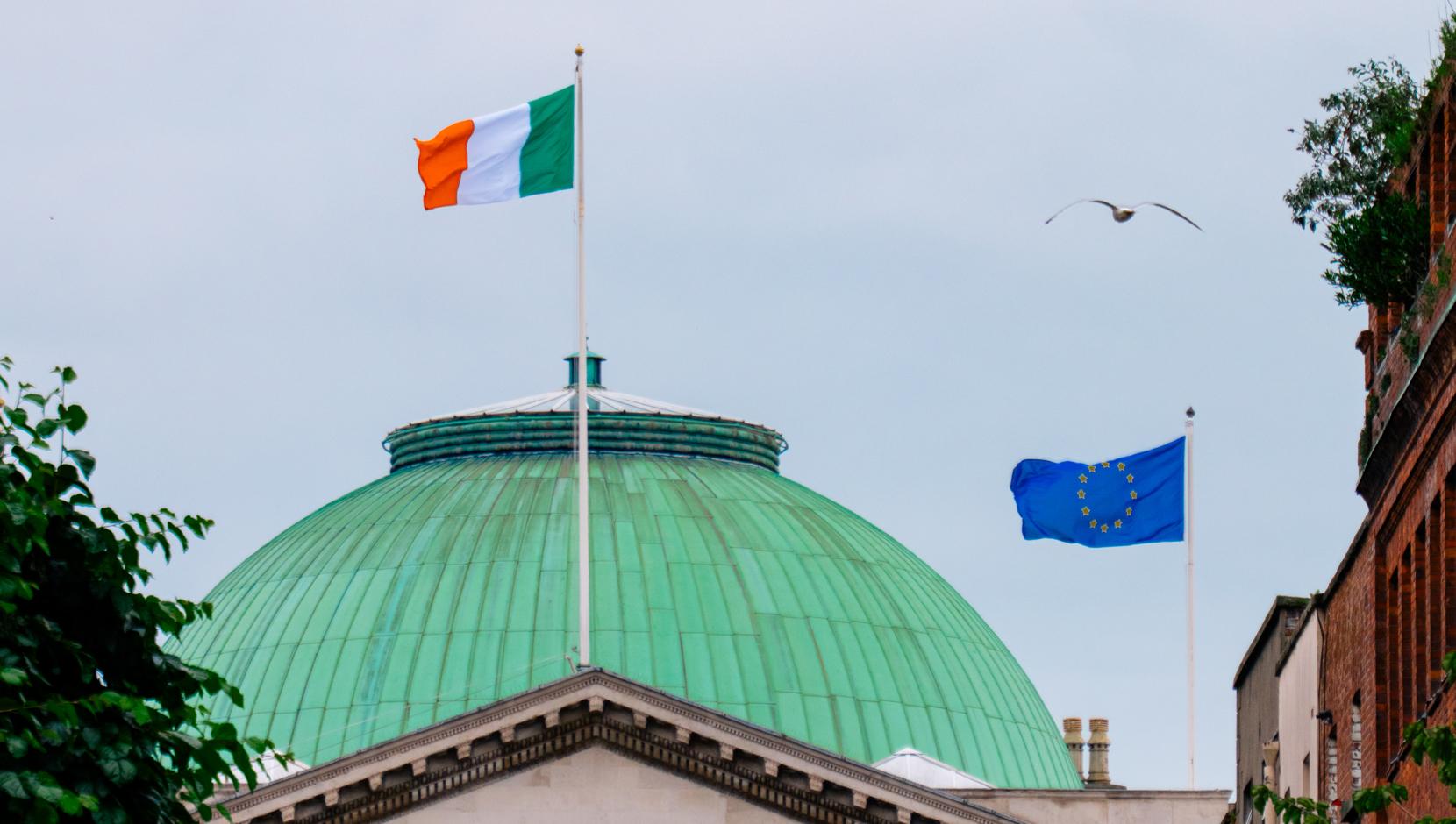
Ireland is holding the Presidency of the Council of the European Union from 1 July to 31 December 2026, giving Irish ministers a central role in coordinating negotiations on European legislation and policy. The Presidency focuses on three priorities: competitiveness, values and security. For Irish businesses and citizens, its significance lies in the decisions Ireland helps advance on the single market, economic competitiveness, future EU funding, trade and European security.
The Presidency does not give Ireland unilateral control over EU laws or spending. Instead, it provides an opportunity to chair negotiations, build agreement between Member States and influence the progress of proposals that affect Ireland and the wider European economy.
With the Presidency now under way, the remaining months offer an opportunity to assess which priorities are progressing, which decisions remain unresolved and what Irish businesses should monitor.
Key Facts About Ireland’s EU Presidency
| Detail | What to know |
|---|---|
| Presidency dates | 1 July–31 December 2026 |
| Presidency number | Ireland’s eighth |
| Previous Irish Presidency | 2013 |
| Core priorities | Competitiveness, values and security |
| Main institutional role | Chair Council meetings and help progress EU policy |
| Key economic focus | Single market, competitiveness and regulatory simplification |
| Major long-term issue | EU budget for 2028–2034 |
| Next Presidency | Lithuania, January–June 2027 |
Source: Council of the European Union and the Irish Presidency programme.
Table of Contents
- What is Ireland’s EU Presidency?
- What are Ireland’s three main priorities?
- What does it mean for Irish businesses?
- How could it affect citizens?
- Why does the next EU budget matter?
- What about AI, technology and regulation?
- What does the Presidency mean for the UK and Northern Ireland?
- What can Ireland realistically achieve?
- What should businesses and citizens watch next?
- Frequently asked questions
What Is Ireland’s EU Presidency?
Ireland’s Presidency is the rotating chairmanship of the Council of the European Union, one of the EU’s main decision-making institutions.
The Council brings together ministers from the Member States to discuss, negotiate and adopt EU legislation, usually alongside the European Parliament. Different national ministers participate depending on the subject being discussed.
During Ireland’s six-month term, Irish ministers chair relevant Council meetings, help organise negotiations and work to build agreement between governments.
The Presidency also helps coordinate the Council’s work across policy areas, from economic affairs and employment to agriculture, the environment and justice.
It is important to distinguish the Council of the European Union from the European Council. The former brings together national ministers and participates in adopting legislation. The latter brings together EU leaders and sets the Union’s broader political direction.
Ireland does not become the EU’s sole political leader during its Presidency. The European Commission retains its role in proposing legislation, while the European Parliament and Member States retain their respective decision-making powers.
What Are Ireland’s Three Main Priorities?
The Irish Presidency is organised around competitiveness, values and security.
1. Competitiveness and economic growth
Ireland wants to advance European productivity, investment, innovation and the effective operation of the single market.
The agenda includes reducing unnecessary regulatory burdens, improving conditions for businesses to grow and strengthening Europe’s ability to compete internationally.
For Irish companies, the relevant issues include barriers to cross-border trade, the costs of compliance, digital transformation and the ability to operate across EU markets.
However, a stated Presidency priority is not the same as a completed policy reform. Progress depends on negotiations, the content of proposals and agreement between the relevant institutions.
2. European values and democratic institutions
The Presidency also prioritises the values underpinning the European Union, including democracy, the rule of law, equality and fundamental rights.
These issues affect the EU’s internal cooperation and its relationships with countries seeking membership.
For Ireland, this agenda is relevant to the future direction of the Union and the standards expected of Member States and accession candidates.
3. European security and defence
European security is another central priority.
The EU’s agenda includes strengthening security and defence capabilities, responding to geopolitical risks and continuing support for Ukraine.
Ireland’s Presidency provides an opportunity to help advance Council discussions in these areas. The extent of any agreement depends on Member States and the applicable EU decision-making procedures.
What Does Ireland’s EU Presidency Mean for Irish Businesses?
The biggest potential business implications are linked to competitiveness, the single market, regulatory simplification, innovation and the EU’s future spending priorities.
The Presidency does not automatically introduce new business grants, cut taxes or change every company’s legal obligations. Businesses should instead monitor specific policy developments and assess their implications when proposals advance or rules change.
Small and medium-sized enterprises
SMEs may benefit if EU initiatives reduce unnecessary administrative burdens or make cross-border business easier.
Simpler procedures can potentially reduce the time and resources required to meet regulatory requirements. More effective single-market rules could also help businesses sell products and services across Member States.
However, businesses should not assume that every simplification proposal will be adopted or that all existing requirements will disappear.
Companies should monitor official updates and identify which proposals, if adopted, would materially affect their operations.
Trade and cross-border business
Ireland’s open economy makes European trade policy and the operation of the single market especially relevant.
The Presidency’s work on competitiveness and external trade could help advance discussions affecting access to markets, supply-chain resilience and Europe’s economic relationships with international partners.
For businesses, the practical questions are whether negotiations produce changes to market access, compliance procedures or the commercial environment.
Those outcomes should be assessed individually rather than treated as guaranteed benefits of the Presidency.
Investment and innovation
The Irish agenda places importance on investment, innovation and the development of a more competitive European economy.
That is relevant to companies working in technology, life sciences, clean technology, advanced manufacturing and other strategic sectors.
The Presidency may help progress proposals intended to improve Europe’s investment environment. It cannot, by itself, guarantee that a particular company will receive investment or that new funding will become immediately available.
Businesses should distinguish policy objectives from approved programmes and published eligibility criteria.
How Could Ireland’s EU Presidency Affect Citizens?
For citizens, the Presidency matters primarily through the policies that EU institutions and national governments negotiate.
The effects are unlikely to arrive as one single change on a specific date. They may emerge through legislation, national implementation, public spending decisions and changes to the wider economic environment.
Jobs and skills
European competitiveness and innovation policies can influence the environment in which employers invest, develop new products and recruit workers.
Ireland’s Presidency also provides a platform for discussions about the skills and capabilities required for a changing European economy.
The actual effects on employment will depend on the policies adopted and how businesses respond. The Presidency alone does not guarantee additional jobs or wage increases.
Consumer protection
The EU’s work on the single market, digital services and consumer protection can affect how products and services are offered across borders.
Irish consumers should distinguish between existing rights and new proposals under negotiation. A policy announcement does not necessarily mean that a new consumer right is already enforceable.
Security and international cooperation
The Presidency’s security priorities concern the EU’s collective response to geopolitical challenges and the resilience of European countries.
For Ireland, these discussions are relevant to European cooperation and the country’s relationships with its EU partners.
Specific consequences depend on the measures agreed and the responsibilities of the institutions involved.
Why Does the EU’s 2028–2034 Budget Matter?
One of the most significant issues on the Presidency’s agenda is the EU’s next Multiannual Financial Framework, covering 2028–2034.
The long-term budget sets spending priorities and provides the framework for major EU programmes.
It is relevant to areas including agriculture, cohesion policy, research, competitiveness and other European priorities.
Ireland’s Presidency is working towards preparing the ground for a political agreement by the end of 2026. Formal adoption and the approval of associated programmes involve further steps.
For Irish businesses, universities, farmers, researchers and regional organisations, the budget matters because future funding opportunities depend on the programmes and rules ultimately agreed.
But it would be misleading to suggest that Ireland’s Presidency automatically secures additional funding for a particular sector or region.
Organisations should monitor the negotiations, examine the final programme rules when available and assess eligibility before making funding plans.
What About AI, Technology and Digital Regulation?
Technology is a significant part of Europe’s competitiveness agenda, and Ireland has a particular interest because of its technology sector and international business presence.
The Irish Presidency’s work on competitiveness and innovation intersects with wider EU discussions on digital policy, artificial intelligence and regulatory simplification.
For Irish businesses, the practical concern is how European policy affects innovation, compliance costs, digital investment and the adoption of new technologies.
The EU AI Act is one example of an existing regulatory framework whose implementation businesses must understand. Ireland’s Presidency does not suspend the Act or independently change its requirements.
Companies using AI should continue to assess their legal obligations under the applicable rules, follow guidance from the relevant Irish authorities and monitor any proposed legislative changes through official channels.
Technology policy is therefore an important part of the Presidency’s wider economic context, rather than a promise that every AI-related issue will be resolved before December.
What Does the Presidency Mean for the UK and Northern Ireland?
Ireland’s Presidency also takes place within the wider context of EU–UK relations.
The United Kingdom is not an EU Member State and does not participate in the Council Presidency rotation. Northern Ireland remains part of the UK, although specific arrangements govern certain aspects of its relationship with the EU.
Ireland can use its role to support constructive discussions on EU relations with the UK and other European partners. However, the Presidency does not give Ireland the authority to negotiate every aspect of UK–EU relations independently.
For businesses trading across the Irish border or between Ireland and Great Britain, the practical implications depend on the particular trade, customs, regulatory or cooperation arrangements concerned.
Businesses should continue to rely on current official guidance rather than assume that the Presidency will automatically remove existing barriers or change Northern Ireland’s arrangements.
What Can Ireland Realistically Achieve?
Ireland can influence how the Council’s work is organised and how negotiations progress. It can help identify compromises, encourage discussion and seek to move policy files towards agreement.
It cannot guarantee that every proposal will pass.
The European Commission, the European Parliament and Member States all have roles in the legislative process. Some decisions require particular voting thresholds or unanimous agreement.
The Presidency’s effectiveness should therefore be judged by the progress made on individual files, the quality of compromises reached and whether agreed priorities translate into concrete outcomes.
The distinction matters for readers: political ambition describes what a government wants to achieve, while an adopted measure establishes what has actually changed.
What Should Businesses and Citizens Watch Next?
With the Presidency scheduled to end on 31 December 2026, readers should follow the official programme and published Council decisions through the remainder of the term.
| Issue | What to monitor | Why it matters |
|---|---|---|
| EU competitiveness | Progress on single-market and simplification initiatives | Business costs and cross-border operations |
| Long-term EU budget | Negotiations on the 2028–2034 framework | Future programme funding |
| Digital policy | Legislative developments and official implementation guidance | Technology investment and compliance |
| Trade | Published agreements and negotiating developments | Market access and supply chains |
| Security | Council conclusions and agreed measures | European cooperation and resilience |
| Values and enlargement | Progress on rule-of-law and accession discussions | The EU’s future direction |
Readers should check the official Council and Irish Presidency websites for confirmed developments rather than rely on speculation about what may be agreed.
Conclusion
Ireland’s 2026 EU Presidency gives the country an important role in steering Council negotiations during a six-month period shaped by competitiveness, values and security.
For businesses, the most relevant areas include single-market reform, regulatory simplification, investment and the next EU budget. For citizens, the significance lies in the policies that may eventually affect employment, consumer protection, security and public programmes.
The key distinction is between influence and control. Ireland can chair negotiations, build consensus and help advance EU priorities, but it cannot unilaterally decide the Union’s laws, budget or policy outcomes.
The Presidency’s lasting significance will depend on what the EU institutions and Member States agree and how those decisions are subsequently implemented in Ireland and across Europe.
takeaways
The most important points to surface near the beginning of the published article are:
-
Ireland’s Presidency runs from 1 July to 31 December 2026.
-
Its three official priorities are competitiveness, values and security.
-
The Presidency’s role is to chair Council meetings and help advance negotiations.
-
The next EU long-term budget covers 2028–2034.
-
A Presidency priority is not proof that a new law, grant or benefit has been approved.
-
UK–EU relations and Northern Ireland require separate treatment from Ireland’s EU membership.
These distinctions make the article more useful for AI answers and help avoid overstating the Presidency’s powers.
