


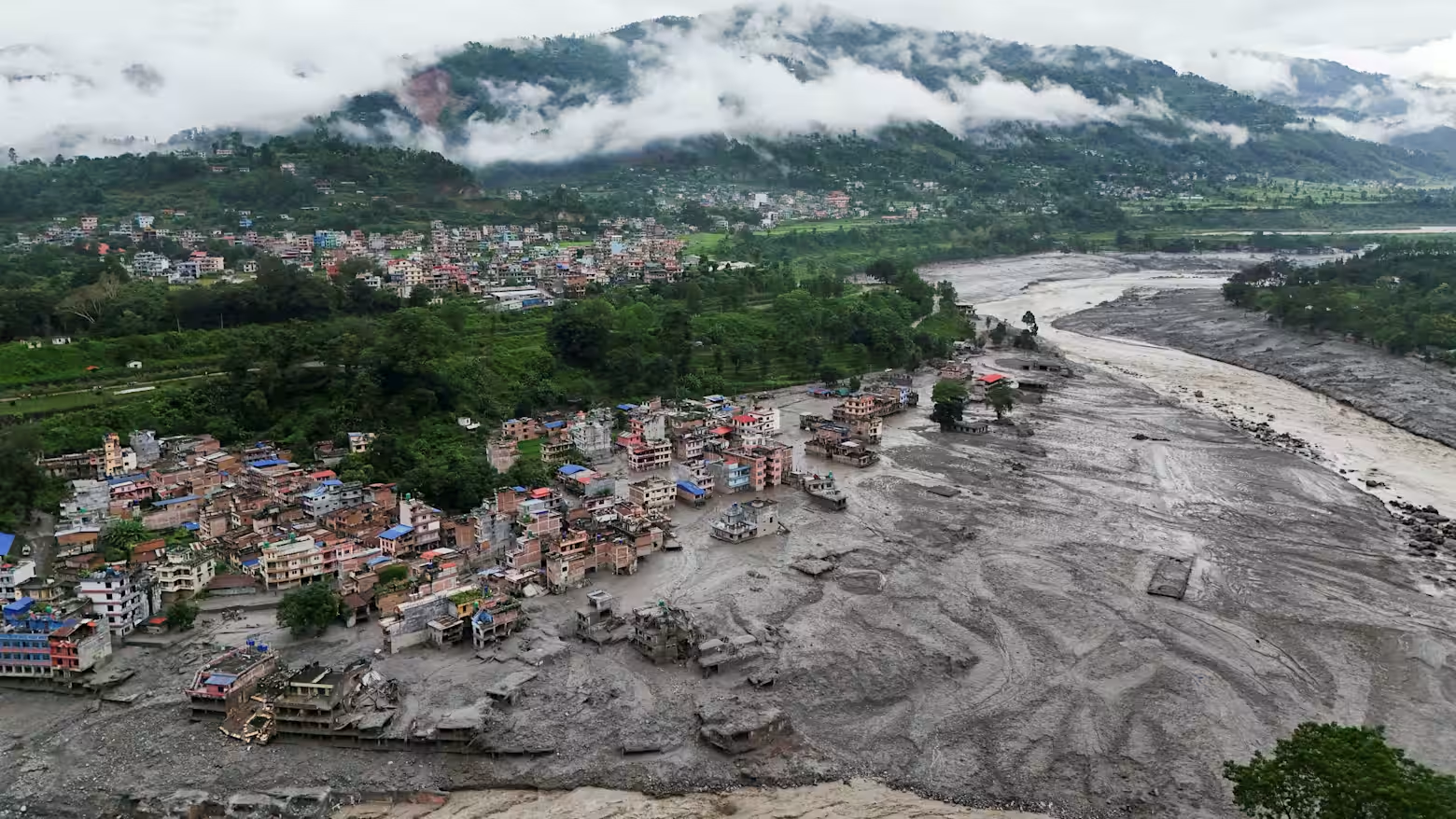
Nepal is facing renewed flood concerns after a lake formed by debris following the catastrophic Bhote Koshi flash flood began overflowing on 28 August, prompting authorities to temporarily halt some rescue operations and monitor the risk of another surge. Nepal’s Department of Hydrology and Meteorology continues to show warnings in effect, while the UK Government has updated its travel advice to warn that further flooding is possible. British nationals are among those reported missing.
Nepal flood warning: what is the latest?
Yes. There are continuing warnings about further flooding in parts of Nepal.
The immediate concern is no longer only the damage caused by the original flash flood on 26 August. A debris-dammed lake formed upstream near the Nepal-China border has created an additional hazard. Reports on 28 August said the lake had begun overflowing, with water entering the Bhote Koshi River system.
The development was serious enough for rescue operations in the affected Rasuwa area to be temporarily suspended while authorities assessed the threat. Residents and emergency teams were also reported to have moved towards safer, higher ground.
Nepal’s Department of Hydrology and Meteorology (DHM) currently displays a warning system with warnings in effect and provides real-time hydrological monitoring. Its public service also directs people to flood early-warning information through its toll-free number 1155.
What happened in Nepal?
A devastating flash flood struck the Bhote Koshi River area of Rasuwa on 26 August.
The flooding caused widespread destruction to homes, roads, bridges, hydropower facilities and other critical infrastructure. Nepal’s Ministry of Foreign Affairs said its security, disaster-management and health agencies had been mobilised for search and rescue, evacuation, medical assistance and relief operations.
The event affected both local communities and foreign visitors in the region. Nepal’s official 27 August update reported 596 foreign nationals still missing from 33 countries at that stage, including 33 people listed under the United Kingdom. The figures were explicitly described as subject to continuing verification as rescue operations progressed.
The numbers have continued to change as authorities identify survivors and update missing-person records, so figures should be treated as time-specific rather than a final toll.
Why is there a risk of another flood?
The major additional concern is an unstable body of water created when debris blocked a river system.
The resulting lake acted as a natural reservoir above parts of the disaster zone. If water continues to rise or the debris barrier becomes unstable, a sudden release could generate another surge downstream.
That is why the latest development is different from a normal weather-related flood warning. The risk involves both river flooding and a rapidly changing geological and hydrological situation.
Reuters reported on 28 August that the lake had begun overflowing and that its water was flowing into the Bhote Koshi River. Rescue teams temporarily suspended operations while the immediate threat was assessed.
Has the lake already burst?
The safest description is that the lake has begun overflowing, rather than claiming that the entire barrier has catastrophically failed.
That distinction matters.
An overflow does not automatically mean that a complete dam break or second catastrophic flood will occur. However, it can increase downstream flows and indicates that the situation remains unstable.
Authorities therefore continue to monitor the river system and the lake rather than treating the original flood as the end of the emergency.
Are there other warnings in Nepal?
There are several layers of risk that readers should distinguish.
1. Further flooding
The UK Government’s latest Nepal travel advice explicitly says that authorities have warned of the risk of further flooding. The advice was updated on 28 August.
2. River-level risks
Nepal’s Department of Hydrology and Meteorology operates real-time hydrological monitoring and a flood early-warning system. Its website currently displays warnings in effect.
3. Landslides and unstable terrain
The original disaster involved massive quantities of rock, mud, ice and debris moving through mountainous river systems. This means that already-damaged roads and slopes can remain hazardous even after floodwaters recede.
4. Monsoon-related flooding
Nepal is in its monsoon season. The UK Government warns that monsoon travel can be hazardous because flooding and landslides can make roads impassable, delay journeys and cut off communities.
5. Changing conditions around the disaster zone
The situation can change quickly because damaged infrastructure, blocked rivers and unstable slopes make conventional travel and rescue difficult.
The UK Government specifically advises people travelling in affected areas to follow Nepalese government and local-authority guidance and remain alert to changing conditions.
What is Nepal’s official warning system saying?
Nepal’s Department of Hydrology and Meteorology is the country’s key source for weather and flood monitoring.
Its website provides:
- Weather warnings
- Hydrology warnings
- Real-time stream-flow information
- Flood forecasts
- Special weather forecasts
- Flood early-warning information
- Cryosphere monitoring
As of 28 August, the DHM website showed “WARNING(S) IN EFFECT” and directed users towards its hydrological monitoring services.
For extreme-weather and flood information, the department lists 1155 as its toll-free number, with an option specifically for flood early warnings.
What does the latest UK travel advice say?
The UK Government’s Nepal travel advice was updated on 28 August.
It says major flooding on 26 August affected Rasuwa and the Nepal-China border area, causing severe damage to buildings, roads, transport and communications infrastructure.
It also states that authorities have warned of the risk of further flooding and says the situation may change rapidly. Travellers in affected areas are advised to follow instructions from Nepalese authorities and local officials.
The UK Government’s wider Nepal guidance also warns that travelling during the monsoon season, normally June to October, can be hazardous because flooding and landslides can disrupt roads and isolate communities.
What does this mean for British travellers?
British travellers should not interpret the latest situation as a warning that every part of Nepal is experiencing flooding.
The most serious concerns are concentrated around the affected disaster areas, particularly Rasuwa and the Nepal-China border region.
However, travellers should recognise that the combination of monsoon weather, damaged infrastructure, landslide risk and continuing river monitoring means conditions can change quickly.
Anyone already in an affected region should follow instructions from local authorities rather than attempting to travel through damaged roads or river corridors.
The UK Government has specifically told British nationals in the region to follow local guidance and its Nepal travel advice.
British nationals are among those missing
The disaster has a direct UK dimension because British nationals are among the foreign nationals reported missing.
Nepal’s Ministry of Foreign Affairs listed 33 UK nationals among 596 foreign nationals still missing in its 27 August update. The list covered 33 countries and was based on information from Nepal’s National Disaster Risk Reduction and Management Authority and Nepal Tourism Board.
Those figures are not necessarily the final number. Nepalese authorities have continued updating their records as people are located and verified.
The UK Government has said it is supporting British nationals affected by the disaster and is in contact with relevant authorities.
What should people do if they are in an affected area?
The official advice is straightforward: follow local instructions and monitor official warnings.
People in affected regions should:
- Avoid rivers and recently flooded areas.
- Move to higher ground if instructed by authorities.
- Do not attempt to cross flooded roads or bridges.
- Check whether roads are open before travelling.
- Expect plans to change at short notice.
- Monitor Nepal’s official weather and flood warnings.
- Follow instructions from local authorities and emergency services.
- British nationals should monitor the latest UK Government Nepal travel advice.
The UK Government specifically warns that roads can become impassable during Nepal’s monsoon season and recommends being prepared to change or cancel travel plans at short notice.
How serious is the continuing threat?
The continuing threat should be understood as a developing hydrological emergency, rather than a confirmed second catastrophic flood.
The overflow of the upstream lake is significant because it demonstrates that water is still moving through an unstable landscape after the original disaster.
The fact that rescue operations were temporarily suspended illustrates how seriously emergency teams are treating the additional risk.
At the same time, it would be misleading to say that a second disaster is certain.
The eventual impact depends on water levels, the stability of the debris barrier, rainfall, river capacity and decisions by emergency authorities.
Nepal flood timeline
| Date | Development |
|---|---|
| 26 August 2026 | Severe flash flooding strikes the Bhote Koshi River area in Rasuwa. |
| 27 August 2026 | Nepal reports extensive destruction and continues search-and-rescue operations. |
| 27 August 2026 | Nepal’s Foreign Ministry reports hundreds of foreign nationals missing, including 33 UK nationals. |
| 27 August 2026 | Nepal and China warn of additional flood risks linked to debris-dammed water. |
| 28 August 2026 | The upstream lake begins overflowing, increasing concern about further flooding. |
| 28 August 2026 | Some rescue operations are temporarily halted as authorities assess the new threat. |
| 28 August 2026 | UK travel advice is updated to warn of the risk of further flooding. |
What happens next?
The immediate priority is continued monitoring of the lake, rivers and downstream areas while rescue teams search for people still missing.
Nepal’s official flood-monitoring infrastructure will remain particularly important because river conditions can change rapidly.
The Department of Hydrology and Meteorology’s warning and monitoring systems should therefore be treated as a primary source for developing flood information.
For British citizens and families trying to establish the welfare of people in the affected region, the UK Government’s travel advice and Nepalese official channels are more reliable than unverified social-media reports.
Nepal’s Ministry of Foreign Affairs has also established an emergency control room for foreign nationals affected by the flood, including missing people. It has urged people to rely on official information and avoid circulating unverified claims.
Key facts
- The original catastrophic flash flood occurred on 26 August 2026.
- The Bhote Koshi River area and Rasuwa district were among the worst affected areas.
- A debris-dammed lake created an additional flood risk.
- The lake began overflowing on 28 August.
- Rescue operations were temporarily affected by the new threat.
- Nepal’s DHM currently displays warnings in effect.
- The DHM provides a flood early-warning service through 1155.
- The UK Government has warned of the risk of further flooding.
- British nationals are among those reported missing.
- Conditions remain capable of changing rapidly.
Why the warning matters beyond Rasuwa
The latest developments do not mean that the whole of Nepal is under one identical flood threat.
Instead, the emergency highlights the importance of distinguishing between local flood warnings, river-level monitoring, landslide risks and wider monsoon conditions.
For people travelling in Nepal, particularly in mountainous areas, the practical message is that conditions should be checked immediately before travelling rather than relying on a previous assessment of whether a route or destination was safe.
For the UK audience, the most important official sources are the UK Government’s travel advice and Nepal’s own hydrological and emergency-warning systems.
Conclusion
The answer to the question of whether there are further warnings after Nepal’s devastating flash flood is yes.
The most immediate concern on 28 August is the overflowing lake created by debris after the original disaster. Authorities are monitoring the situation because additional water entering the Bhote Koshi system could create further flooding downstream. Nepal’s official hydrological service continues to show warnings in effect, while the UK Government has warned travellers that further flooding is possible.
The situation remains fluid. A further catastrophic flood should not be presented as inevitable, but neither should the additional risk be dismissed.
For people in affected areas, the safest approach is to follow local evacuation and emergency instructions, avoid unstable river and landslide zones and monitor official warnings closely.
FAQ
Is there a new flood warning in Nepal?
Yes. Authorities are warning of the possibility of further flooding following the 26 August disaster. The UK Government’s Nepal travel advice, updated on 28 August, specifically says authorities have warned of further flooding.
What caused the latest flood risk?
A debris-dammed lake formed after the initial disaster. The lake subsequently began overflowing, creating concern about additional water entering the Bhote Koshi River system.
Has the lake completely burst?
Reports on 28 August described the lake as overflowing. That is not the same as confirming a complete catastrophic failure of the entire barrier.
Which part of Nepal is most affected?
Rasuwa and the Nepal-China border region are among the principal affected areas. The original flood also damaged areas along downstream river systems.
Is Nepal safe for UK travellers?
Safety varies significantly by location. The UK Government warns that the affected region remains dangerous and that further flooding is possible. It also warns that Nepal’s monsoon season can bring flooding and landslides that disrupt travel.
Are British nationals missing in Nepal?
Yes. Nepal’s 27 August official update listed 33 UK nationals among foreign nationals still missing at that point. The figures remain subject to verification as rescue operations continue.
Where can people check Nepal flood warnings?
Nepal’s Department of Hydrology and Meteorology provides weather, hydrological and flood-monitoring information. Its flood early-warning service can also be reached through toll-free number 1155.
What should people do during a flood warning?
People should follow instructions from local authorities, move to safer ground when instructed, avoid flooded rivers and roads, and monitor official emergency information.
Could there be another major flood?
There is a documented risk of further flooding, but it would be inaccurate to say that another catastrophic flood is certain. The outcome depends on water levels, the stability of the debris barrier, rainfall and river conditions.
Is the Nepal flood linked to the monsoon?
The disaster is being treated as a complex flash-flood and geological event, while Nepal is also in its monsoon season. The UK Government separately warns that monsoon conditions can cause flooding and landslides and disrupt transport.
